5 Important Tips for Extending the Lifespan of a Solar Inverter
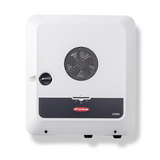
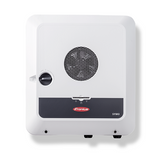
Twenty-seven years ago, 30 Fronius Sunrise solar inverters were installed in Vorarlberg, Austria. Since 1999, they have formed the backbone of a large facade PV system. Why do some devices last 10-15 years, while others last a quarter of a century?
In the late 1990s, two subsidiary companies — doma vkw Energietechnik and Ernst Schweizer GmbH — seemed to have found a gold mine. As a PV system installer, doma vkw commissioned a 49 kWp facade system at its facility in 1999. Its core components — over 30 solar inverters — are still providing affordable solar energy, even after 27 years.
«We consciously chose Fronius. At that time, Sunrise was a brand-new product, but its quality has convinced us over the years. In 27 years, only two inverters failed, but it wasn't a major issue as we bought three spares. The third spare inverter is still waiting for its chance to replace one of the other devices.»
Replacing inverters is now an outdated concept. Instead, leading manufacturers offer more sustainable and repairable solutions. But where does the resilience of the power converters installed in Vorarlberg come from? Here are five practical tips to help you optimize the lifespan of your inverter.

Keep your inverter at the right temperature
One of the most important factors for longevity is temperature. Inverters are best kept cool, as sensitive power electronics (capacitors and transistors) are highly vulnerable to temperature fluctuations. Heat accelerates chemical reactions inside the device.
Hot environment
Every additional 10 °C of heat cuts the lifespan of components in half due to accelerated degradation.
Cool environment
Lowering the operating temperature by 10 °C doubles the lifespan of sensitive power electronics.
The amount of electricity flowing through the inverter affects its temperature. Every time DC is converted to AC, losses occur that generate heat. Under full load, the casing temperature can reach 70 °C (158 °F).
What is Power Derating?
Invest in high-quality components
It makes logical sense: products designed for long-term use last longer than those whose sole purpose is to maximize quick profits for the manufacturer. One poor-quality capacitor is enough to cause the entire device to fail. Long-lasting capacitors, robust semiconductors, and high-quality transformers are the key to success.
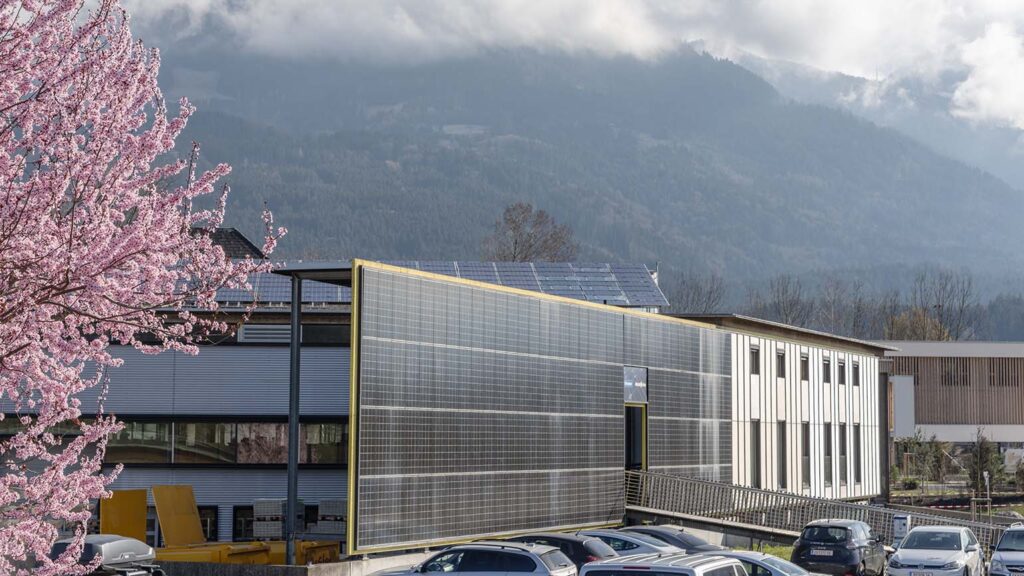
«Our facade system, combined with the Fronius Sunrise, was a highly innovative solution even back then. Today, we are still committed to offering our customers only the best and most innovative products. That is why we rely heavily on our partner.»
Often, less is more. Those who use fewer complex power electronics are less likely to encounter failures. Fewer components mean fewer sources of error. Did you know that PV systems equipped with individual power optimizers are significantly more prone to failures? This is why leading experts advise avoiding them if possible.
Proper usage and sizing
The more electricity passes through the inverter, the more heat is generated. However, it is not only prolonged peak loads that cause stress; constant fluctuations in power output also negatively affect the device.
«If the inverter's utilization rate fluctuates significantly (e.g., due to clouds), the operating temperature constantly changes. As a result, the components continuously expand and contract — this is the main cause of wear. Eventually, material fatigue sets in as microcracks.»
The 150% Rule
As a general rule: the maximum output of the connected solar modules should not exceed 150% of the inverter's rated power. For example, for a 10 kW inverter, you should install no more than 15 kW of modules.
Panel Shading
Minimizing shading makes the inverter's job easier. While modern systems (like the Fronius Dynamic Peak Manager) are excellent at finding the ideal voltage point during partial shading, constant searching and fluctuations create additional electrical stress.
Choose the right location
Not every location is equally suitable. The ideal spot should be dry, cool, and well-ventilated. The IP (Ingress Protection) rating determines resilience: devices with IP 65 or higher are protected against dust and water jets from any direction and are suitable for outdoor use.
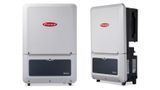
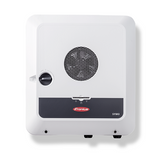
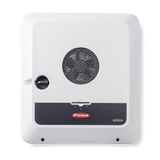
The efficiency of virtually all outdoor inverters drops under direct sunlight (due to the derating mentioned above). An exception is the Fronius Verto — a commercial inverter equipped with a special sun shield and an active cooling system (internal fans direct warm air out of the device).

Older devices (like the Sunrise in Vorarlberg) relied on passive cooling (natural convection). «In this process, warm air rises and cold air falls. If space is limited and inverters are placed close together or on top of one another, this leads to heat buildup,» explains the expert. Therefore, the company wisely positioned the devices: there is ample space between them for free air circulation.
Solar Inverter Maintenance
While solar inverters are designed for years of operation with minimal attention, these few interactive tips will significantly extend their life:
Cleaning fans and fins
It is worth checking the ventilation slots occasionally and cleaning dust from them. Dust acts as an insulator that hinders heat dissipation. No aggressive cleaning agents!
Tightening contacts (professionals only)
During maintenance, a specialist checks if all cables are securely fastened. «Loose terminals act as a resistor and lead to even more heat accumulation,» says Robert Reinbrech.
App Monitoring
App users can quickly spot an issue. If the system suddenly generates less energy on a sunny day, it is a reason to contact the installer.
Software Updates
With some inverters, you can update the firmware yourself via the app. This optimizes equipment performance and enhances security.

Brief Summary
No inverter lasts forever. However, by choosing a high-quality product, adhering to temperature requirements, avoiding overloads, and giving it a little attention, you will significantly extend its life.
«There is hardly any other investment where the saying 'You get what you pay for' applies as clearly as when choosing an inverter. Sustainability is a top priority. It is very important to think not only about today and tomorrow but also about the future. Therefore, we look for stable partners for decades.»
Trust your solar power plant to the professionals at «Total Energo»
Want to maximize the efficiency of your solar station?
Our engineers will help you choose the ideal inverter, conduct an audit of your existing system, or perform professional maintenance so that your station runs flawlessly for decades!