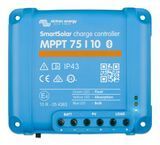
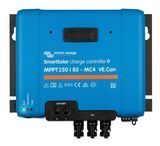
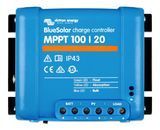
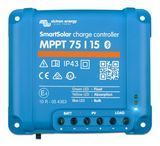
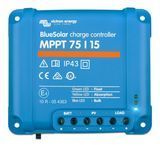
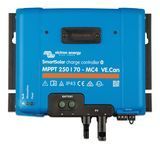
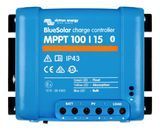
MPPT Controller: The Brain of the Solar System
Everything you need to know about MPPT charge controllers: how they work, main differences from PWM, and a detailed guide to choosing the optimal model for your solar power plant.
MPPT — what it is and why you can't do without it
If you are planning a solar system — a charge controller is mandatory. But not every controller is the same. MPPT is an intelligent device that extracts the maximum from your panels in any weather.
In this article — a simple explanation of how it works, a comparison with PWM, an interactive efficiency calculation, and tips for choosing one for your system.
Our specialists will help you choose an MPPT controller for your specific system — free consultation.
What we will cover in the article
1 What MPPT is and how it works
2 MPPT vs PWM — a real comparison
3 Connection diagram in the system
4 MPPT benefit calculator
5 How to calculate the required current
6 What to consider when choosing
How MPPT "squeezes" the maximum out of panels
☀️ Analogy: MPPT — like a gearbox for solar energy
Imagine that a solar panel is a bicycle engine, and the battery is the wheel. A PWM controller is a fixed gear: rides fine on a flat road, but loses all efficiency on a climb (weak sun).
An MPPT controller is an automatic transmission: every second it selects the optimal gear ratio so that the engine (panel) always operates at the maximum power point — regardless of weather and load.
MPPT constantly scans the voltage-current characteristic of the panels and adjusts the operating mode in real time. Excess voltage is converted into additional charging current — nothing is wasted.
compared to PWM in cloudy weather
vs 70–80% for PWM
in most MPPT controllers
MPPT vs PWM — what to choose
📟 PWM controller
Simply "opens the tap" — lets current pass from panels to the battery and cuts off the excess. Cheap, simple, but inefficient.
● Efficiency: 70–80%
● Panel voltage = battery voltage
● Performs poorly in clouds
● Suitable for systems up to 200 W
● No flexibility in choosing panels
🧠 MPPT controller ⭐ Recommended
Constantly seeks the maximum power point. Converts excess voltage into current. Efficient in any weather.
● Efficiency: 93–98%
● Any panel voltage → any battery
● Efficient even at 20% sunlight
● Mandatory for 400+ W panels
● Supports LiFePO4, AGM, GEL
On a sunny day, MPPT gives 24% more. But the main advantage is in cloudy weather and winter, when PWM practically stops.
How much extra energy MPPT will provide
Click 'Calculate' to see the result. It takes into account your region, battery type, and panel power.
How to choose the right controller current
📌 Formula: MPPT Current (A) = Panel power (W) ÷ Battery voltage (V) × 1.25
Example: 800 W panels, 24 V battery → 800 ÷ 24 × 1.25 = 41.7 A → choose a 40–50 A MPPT
The 1.25 coefficient is a margin for cold days when panels can output more than their nominal power due to low temperatures.
5 parameters to consider when choosing an MPPT controller
Charge current — the main parameter
Determines how many watts of panels the controller can "digest". Calculate using the formula above and always take a 20–30% margin.
| Current | Max. power (12V) | Max. power (24V) | Max. power (48V) |
|---|---|---|---|
| 20 А | 240 W | 480 W | 960 W |
| 30 А | 360 W | 720 W | 1 440 W |
| 40 А | 480 W | 960 W | 1 920 W |
| 60 А | 720 W | 1 440 W | 2 880 W |
| 100 А | 1 200 W | 2 400 W | 4 800 W |
Input voltage (Voc) — must check
If your panels' voltage exceeds the controller's limit — it will break down. Check Voc (open-circuit voltage) and leave a 20% margin.
- 100 V — for small systems (1–2 12V panels)
- 150 V — the most common standard, suitable for most
- 250 V — for large systems and industrial installations
- In winter, panel Voc can be 10–15% higher — take this into account!
Battery type — critical for LiFePO4
Most controllers are suitable for AGM and GEL. But for LiFePO4, an exact charge profile is needed — ensure the controller supports it or has custom settings.
🔋 AGM / GEL
The charge profile is available in any MPPT. Standard voltages: 14.4 V (12V system), 28.8 V (24V), 57.6 V (48V). Any brand will do.
⚡ LiFePO4 — important!
Exact profile needed: 14.6 V / 29.2 V / 58.4 V. Look for controllers with Lithium or User profile support. Epever, Victron — reliable.
Which MPPT controller for which system
MPPT maintains high efficiency even in winter and cloudy weather. PWM loses 30–50% of potential generation in such conditions.
When MPPT is mandatory — 6 scenarios
MPPT is your choice if...
🔋 We will select an MPPT controller for your system
Tell us about your system — we'll calculate the required current, pick a model, and answer your questions. For free.