
Autonomous Lighting Systems for Road Infrastructure
For roads, intersections, pedestrian crossings, and bus stops — fully autonomous lighting without connection to external power grids.
What are autonomous lighting systems and where are they used
Modern road infrastructure requires high-quality autonomous lighting for roads, intersections, bus stops, safety islands, and pedestrian crossings. These standards are increasingly becoming the optimal choice for communities, road services, developers, industrial sites, and transport infrastructure, as they significantly reduce the number of traffic accidents.
Autonomous lighting systems (ALS) based on solar modules, MPPT controllers, battery banks, energy-efficient LED luminaires, and specialized poles allow for the quick implementation of functional lighting without connection to external electrical grids. This is especially important where laying cable lines is technically complex, financially unjustified, or takes too long to implement.
Total-Energo LLC has extensive practical experience in supplying equipment and providing services for over **6,000 ALS sets** across Ukraine (as of 2025). This experience allows the company to act both as an equipment supplier and a systemic engineering partner — from technical specifications development to commissioning and service support.
Where ALS are most commonly used
1Unregulated pedestrian crossings
2Intersections with heavy traffic
3Road sections outside populated areas
4Public transport stops
5Approaches to schools, hospitals, and gas stations
6Logistics complexes and industrial facilities
Autonomous lighting covers a wide range of road infrastructure objects:
Why autonomous lighting is critical for traffic safety
Nighttime — a disproportionately high share of traffic accidents
Autonomous lighting is critical for traffic safety because it ensures the visibility of drivers and pedestrians in the dark, especially at intersections and pedestrian crossings.
According to RoSPA, although the share of car trips at night is smaller, this period accounts for a disproportionately high share of severe and fatal accidents. In EU practice, high-quality street lighting is explicitly considered one of the basic measures to improve pedestrian safety and reduce accidents. For Ukraine, this is especially relevant as the country moves towards European standards, where infrastructure safety must be independent of grid interruptions, and critical sections must be lit stably and continuously.
Lighting a pedestrian crossing at night allows the driver to see people and start adjusting the vehicle's speed in advance. That is why ALS are most often used point-by-point on important road sections.
A distinct advantage of autonomous systems is **independence from centralized power supply interruptions**. Such systems are not affected by emergency or planned power outages.
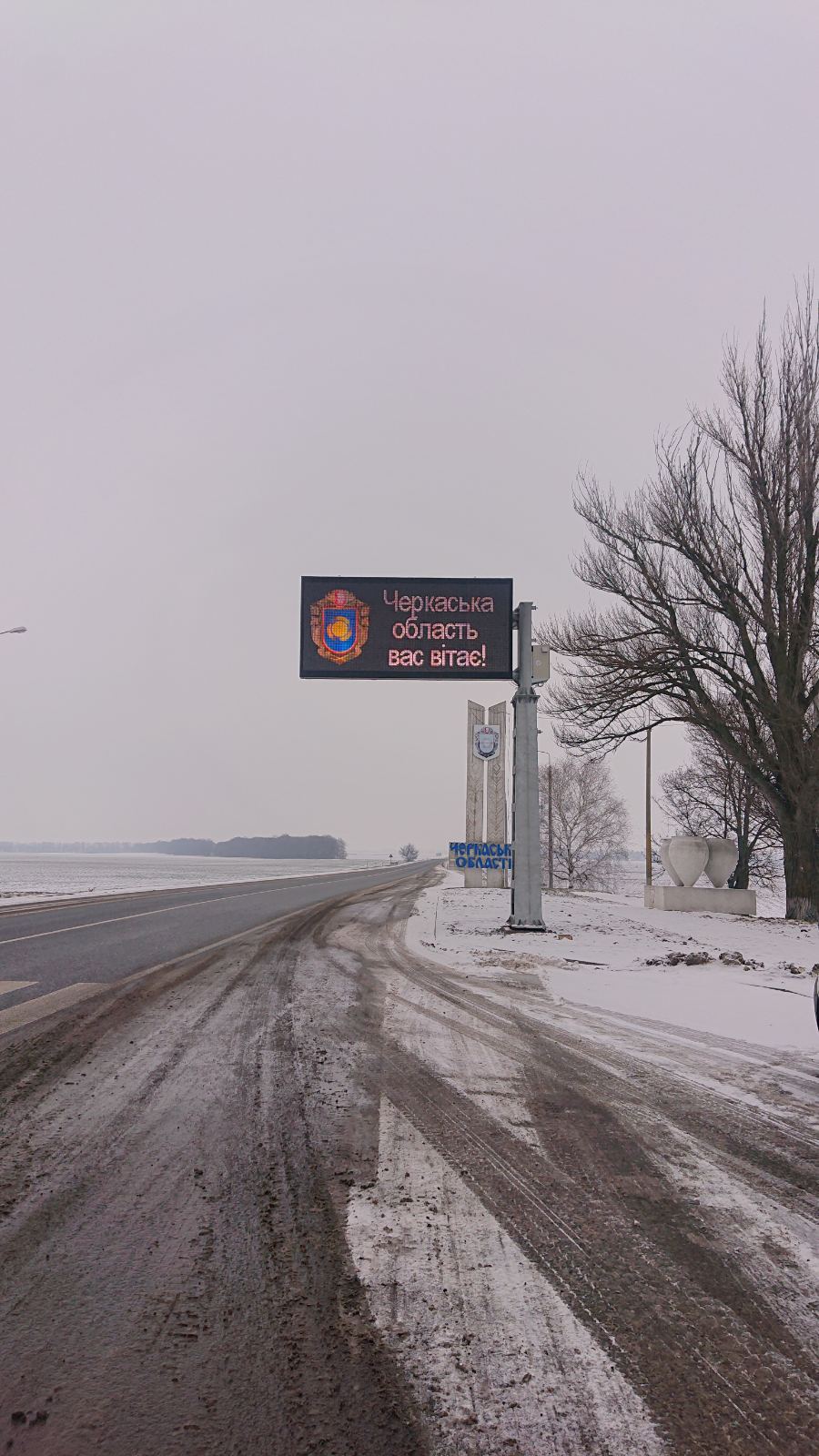
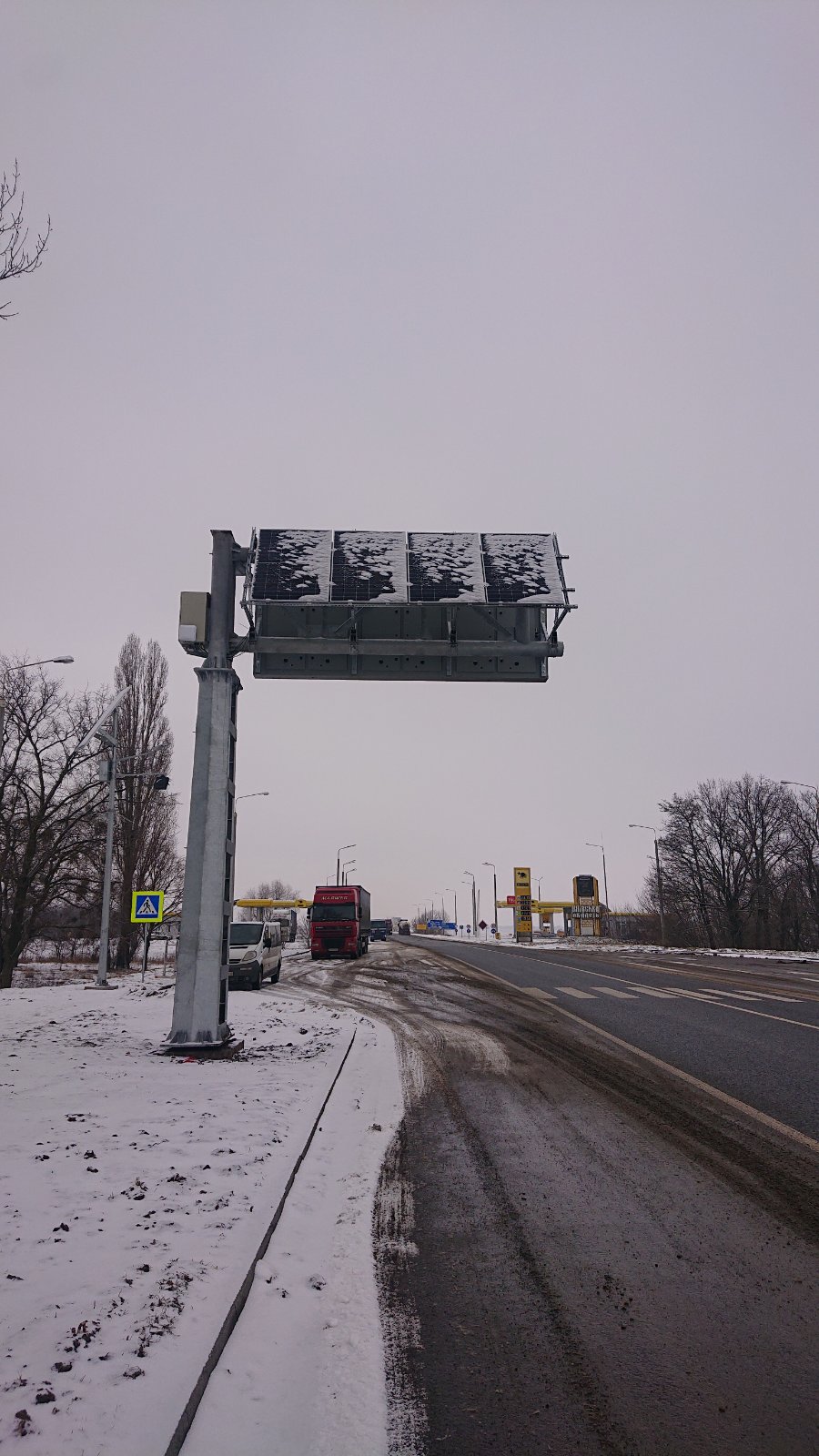
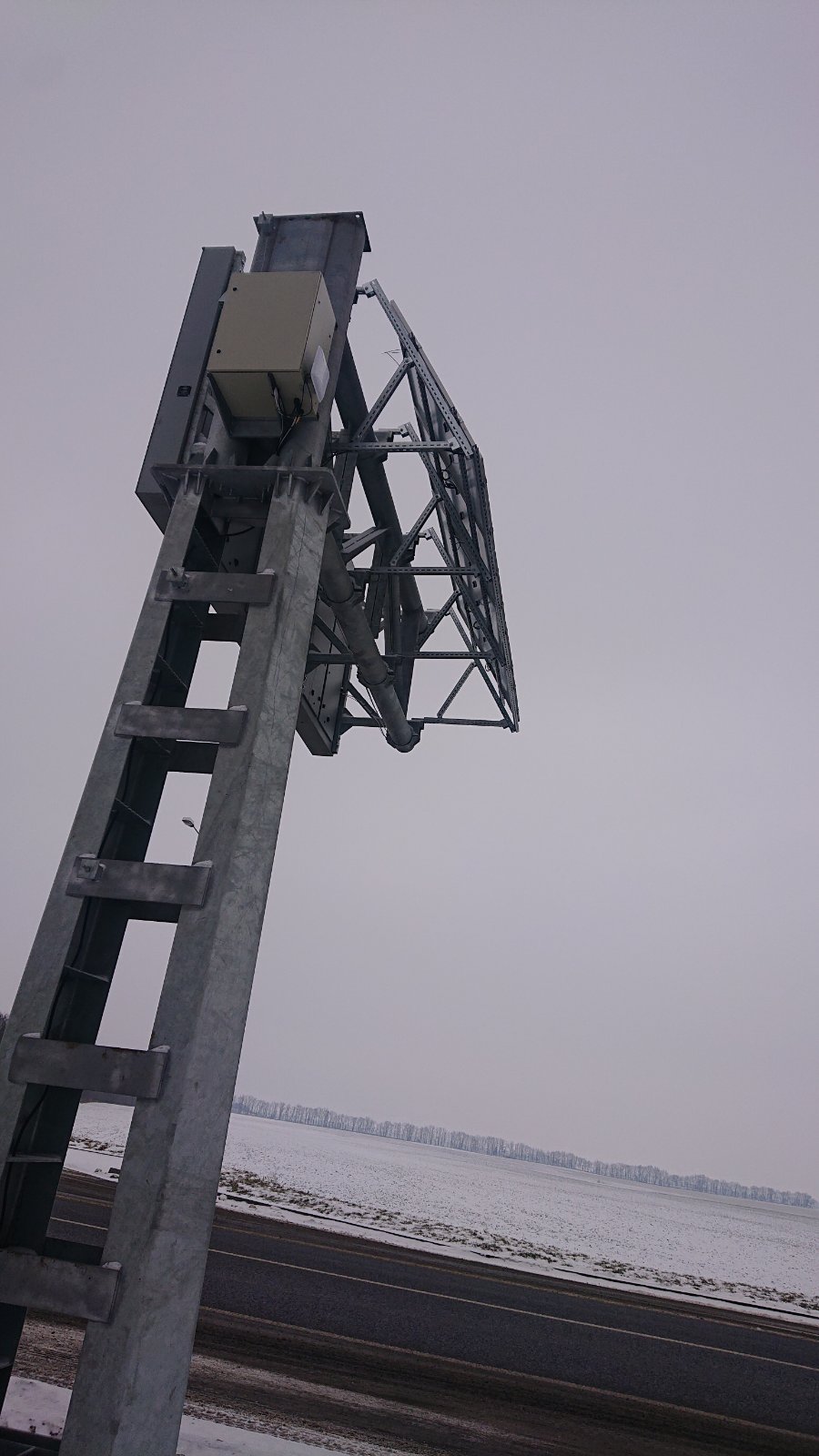
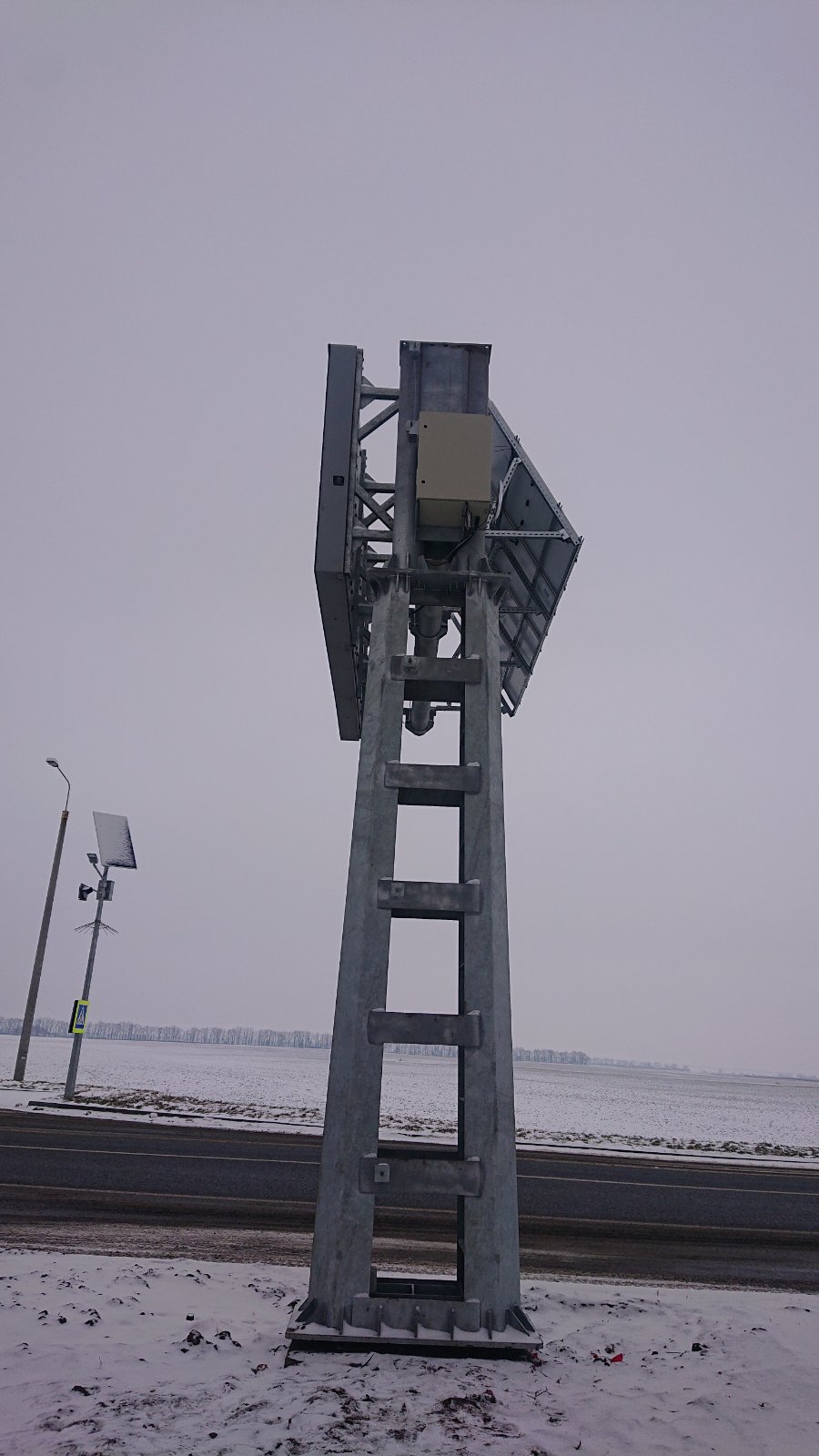
Implemented project by Total-Energo LLC — autonomous power supply for an LED information panel of the road infrastructure in the Cherkasy region.
Autonomous lighting systems or laying power lines?
Savings are formed by the total cost of grid connection: earthworks, trenches, cables, protective pipes, distribution boards, automation, approvals, connection fees, surface restoration, additional construction works, waiting times, and subsequent electricity bills. With autonomous lighting, a significant portion of these costs simply disappears.
What does an autonomous lighting system consist of
Main components
Solar modules charge the battery bank via an MPPT controller. In the evening, the controller turns on the LED luminaire, and in the morning, it turns it off.
The battery accumulates energy to work at night, on cloudy days, and provides a reserve of autonomy for several days without the sun.
The pole supports the weight of the panels, battery compartment, luminaire, and brackets, taking into account the wind loads of the region. Service access for maintenance is provided.
Key technical solutions
An efficient MPPT algorithm ensures maximum energy harvest from the panels even with partial shading or cloudy skies.
Thermal insulation of the battery compartment is critical for stable winter operation and prevents battery degradation from freezing temperatures.
System Autonomy Estimation
How many days does the system work without sun?
Change the parameters to get an estimated calculation of the autonomy reserve for your object.
* Estimation is approximate. DOD 70%, temperature losses 20%. For precise design, please contact our engineers.
Project execution stages: how Total-Energo LLC works
Why a systemic approach is important
Experience in supplying and working on 6,000 sets has allowed Total-Energo LLC to perfect the full cycle of ALS project implementation. An error in the power system balance does not appear immediately — but only in autumn or winter when the system begins to regularly undercharge. That is why experience in implementing a large number of objects is crucial: it allows incorporating not only theoretical but practically proven reserves.
Click on any step to see details.
Formation of technical specifications according to customer requirements
We start with correct specifications. A correct spec avoids the market's most common mistake — selecting a "standard kit" without considering the actual load profile and installation site.
- Object type: road, intersection, pedestrian crossing, bus stop, enterprise territory
- Site geometry and lighting level requirements
- Luminaire operating mode and climatic conditions
- Requirements for the pole, foundation, and anti-vandal execution
- Limitations on deadlines, budget, logistics, and installation
Calculation of luminaire power
At this stage, a lighting engineering solution is selected. Engineers determine the required luminaire power, optics type, installation height, tilt angle, luminous flux distribution, and operating mode. It is fundamentally important to ensure proper visibility in critical zones.
- Approaches to the crossing and the crossing surface itself
- Pedestrian waiting area and conflicting trajectories at the intersection
- Side zones from which a person or cyclist may appear
- Compliance with lighting standards and operating mode
Calculation of the autonomous power system
System reliability in the autumn-winter period is a priority, especially during long cloudy periods and under loads from extended times without natural light. This is where the system's energy balance is formed.
- Selecting solar module power based on regional insolation
- Determining the MPPT controller type and parameters
- Calculating battery capacity and autonomy for a specified number of days
- Temperature regime and thermal insulation of the battery compartment
- Cable cross-sections, protection, switching, and mounting units
- Errors in the ALS power balance do not appear immediately, but only during the autumn, winter, or possibly spring when the system frequently undercharges. Sometimes, when the system is unbalanced regarding battery charge current, issues can arise in summer when batteries fail due to excessively high charge currents. That is why extensive field experience is crucial.
Calculation of the pole and structure for system mounting
Autonomous lighting systems involve not just electricity but mechanics. The pole must withstand equipment weight, wind loads, regional features, mounting height, bracket types, and the system's center of mass. Additional requirements apply to the structure where the luminaire, solar modules, battery compartment, and fasteners are simultaneously placed. Anti-vandal execution for remote areas requires additional structures on the pole.
- Pole type selection based on mounting height and bracket type
- Wind load analysis of the region and system center of mass
- Selecting embedded elements or foundation solutions
- Fastener checks
- Anti-vandal execution for remote areas
- Evaluating service access convenience and maintenance safety
Creation of the project and technical documentation package
High-quality accompanying documentation for the customer is no less important than the physical supply of equipment, as it ensures transparency, repeatability, and manageability of the project.
- Technical solutions and equipment specification
- Drawings, diagrams, and power system calculations
- Mounting units and project documentation (upon request)
- Passport and operational materials, acts
- Operating instructions and as-built documentation
Equipment supply
Having a warehouse, service center, and practical experience across Ukraine allows us to quickly assemble projects and mitigate risks related to component incompatibility. We guarantee that every element — from the luminaire to the controller and mounts — will work as a unified architecture.
- Selection and assembly of equipment with compatibility checks
- Logistical support throughout Ukraine
- Preparing kits for installation
- Technical support during shipment
Execution of installation works throughout Ukraine
Installation of autonomous lighting systems must be performed in compliance with requirements for mechanical strength, electrical safety, solar module orientation, moisture protection, proper wiring, and mode configuration. Even high-quality equipment won't yield desired results without professional installation and setup.
- Installation of poles and structures
- Mounting of lighting and power equipment
- Compliance with mechanical strength, electrical safety, solar panel orientation, and moisture protection requirements
- Commissioning and testing system operation in designated modes
Commissioning and handover of documentation
The final stage is confirming that the system operates according to design parameters and that the customer has received a full set of documents for further operation.
- Control check of the system and mode configuration
- Briefing responsible persons
- Handover of as-built and operational documentation
- Execution of warranty obligations
System Service Support
In-house Service Center
The service model is one of the key advantages of a professional integrator. An in-house service center gives the customer confidence that the system will not be left without support after installation is complete.
What is included in the service package
- Equipment and system warranty from 12 to 60 months
- Technical support for the customer
- Consultations on operating modes
- Equipment diagnostics
- Maintenance servicing
- Repair or replacement of individual components in warranty cases
How long do batteries last without replacement?
Standard ALS kits provide a lifespan of up to 5 years without battery replacement. Special professional solutions provide up to 10–15 years. The lifespan is determined by the battery type, depth of discharge, and the quality of the MPPT charge controller.
Is operation possible in winter, during freezing and cloudy weather?
Yes. The system is designed taking into account prolonged cloudy periods through a reserve of battery capacity. Thermal insulation of the battery compartment protects the batteries from degradation in the cold. Errors in this calculation are the most common problem among inexperienced suppliers.
Can the system be installed in any region of Ukraine?
Yes, installation teams travel throughout Ukraine. The insolation level differs by region — it is higher in the south and lower in the west and north. This is taken into account when calculating the power of solar panels and battery capacity.
Optimal System Composition for a Road Object
Key components of a reliable off-grid system
Why customers choose Total-Energo LLC
Autonomous lighting of roads, intersections, and pedestrian crossings is a technologically mature solution that meets modern requirements for safety, energy efficiency, and infrastructure resilience in the face of an unstable energy system.
ALS is economically justified where grid connection is expensive, lengthy, or unreliable — autonomous kits allow for the quick creation of high-quality lighting and improvement of road safety without unnecessary capital expenditures on cable infrastructure.
Total-Energo LLC offers the customer a fully engineered solution: specifications development, design, calculation of lighting and power components, equipment supply, installation, commissioning, and service support.
Ready to develop a system for your object
We will select a solution for a specific site, object type, and financing conditions. We advise communities, road services, developers, and industrial enterprises.