




|
Quantity
|
Total
|
||
|
|
|||
|
|
|||
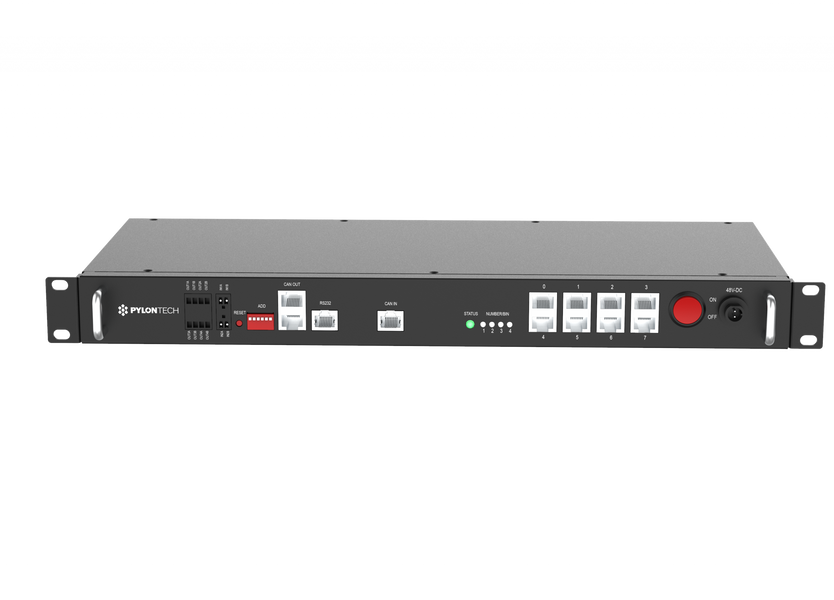
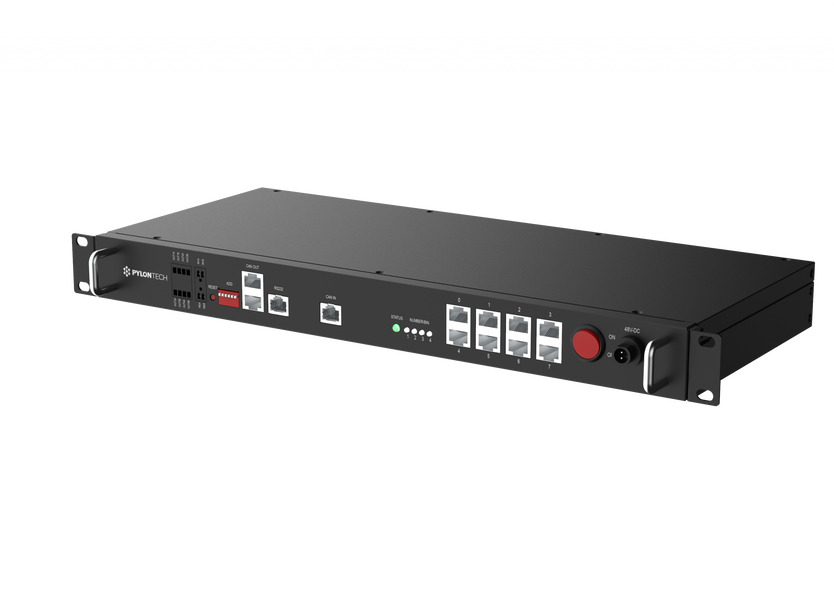
The Pylontech LV-HUB is a specialized CAN/RS485 communication hub for scaling Pylontech 48V battery systems beyond a single string. When a solar energy storage installation requires more battery modules than a single parallel group supports, the LV-HUB acts as a central communication controller, combining up to 5 separate battery strings and presenting them to the inverter as a single unified battery system.
It supports the full range of Pylontech 48V LiFePO₄ modules, including the US2000, US2000C, US3000, US3000C, UP5000, and US5000 series, and has a design life of 15 years in the same IP20-rated format as the batteries it manages. Without the LV-HUB, parallel multi-string configurations either lose BMS communication integrity or require unsupported direct connections between groups, making it a mandatory accessory for any large residential or commercial Pylontech BESS system.
Compatibility and When the LV-HUB is Needed
- US5000 / US5000-B / US3000C / US2000C: The LV-HUB is only required when the number of modules in a single string exceeds 16. One LV-HUB supports up to 6 strings of 16 US5000/US3000C modules via CAN. Multi-string RS485 connections for these models do not require the LV-HUB — see the individual battery's user manual.
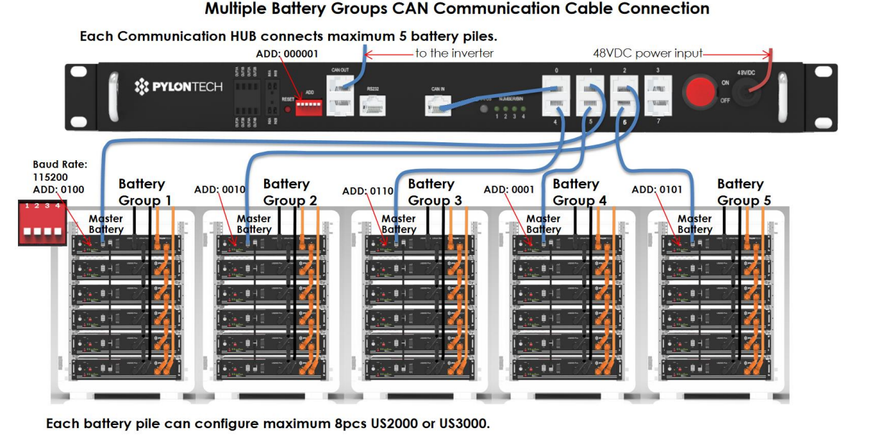
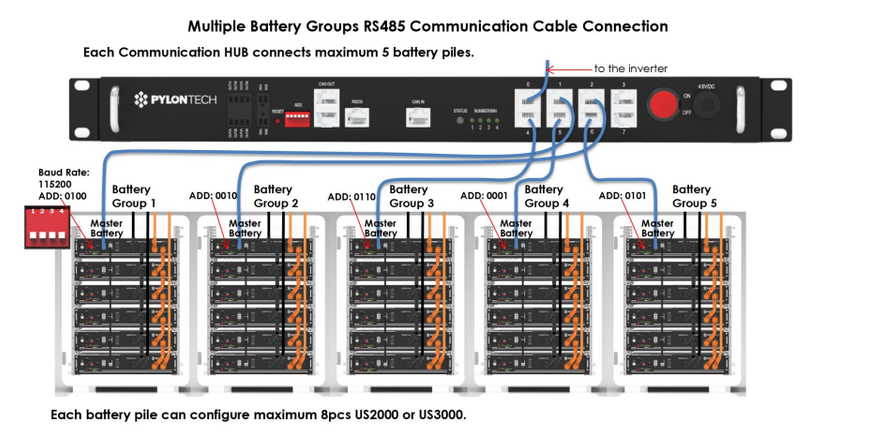
- US2000B Plus / US3000: The LV-HUB is required if the number of modules in a single string exceeds 8. One LV-HUB supports up to 5 strings of 8 modules via CAN or RS485.
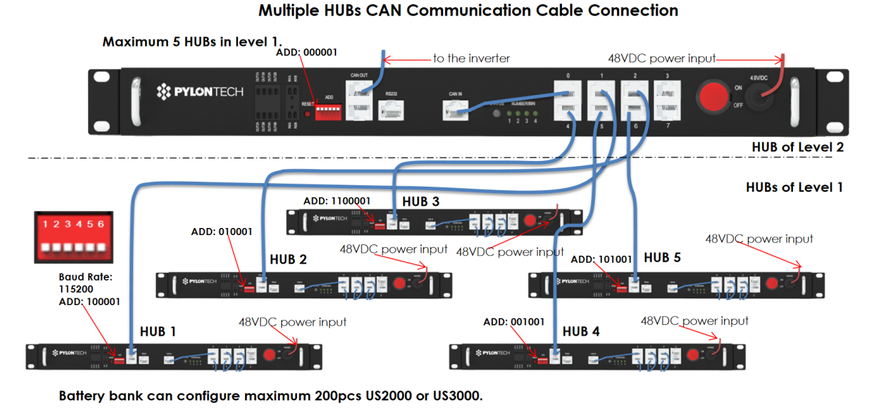
- Multi-Hub Systems: For systems requiring more than 5 strings, up to 5 LV-Hubs can be cascaded in a hierarchical arrangement, with one hub acting as the master (Level 1). Each hub requires a unique DIP switch address. Systems with 2–5 LV-Hubs require an additional LV-Hub to act as the master hub.
- SMA Sunny Island Users: The ADD DIP switch on the master hub must be set to 000011 (firmware B14V0105) or 000101 (firmware B14V0106) — different from the standard 000001 setting. Check the firmware version on the product label before commissioning.
- Warranty Obligation: For warranty purposes, Pylontech classifies the LV-HUB as a battery system component. Therefore, the battery warranty conditions apply to this device.
How the LV-HUB Works in a Multi-String System
Without the LV-HUB, the inverter can only receive BMS data (state of charge, cell temperature, alarms) from a single battery string. The LV-HUB solves this by acting as a communication hub: it collects data from all connected battery strings via CAN or RS485, aggregates it, and provides a single BMS data feed to the inverter — as if the entire battery bank were one battery. The inverter can make precise charge/discharge decisions based on the overall state of the bank, protecting every cell in every string and maximizing the useful capacity of the entire system.
Dual-Protocol: CAN and RS485
The LV-HUB supports both CAN Bus and RS485 communication standards. This dual-protocol capability ensures compatibility with the widest range of hybrid inverters — those using CAN (such as Victron, Sungrow, and Growatt) and those using RS485 (such as SMA). The correct protocol is selected by the cable type and port.
19-Inch Rack Format
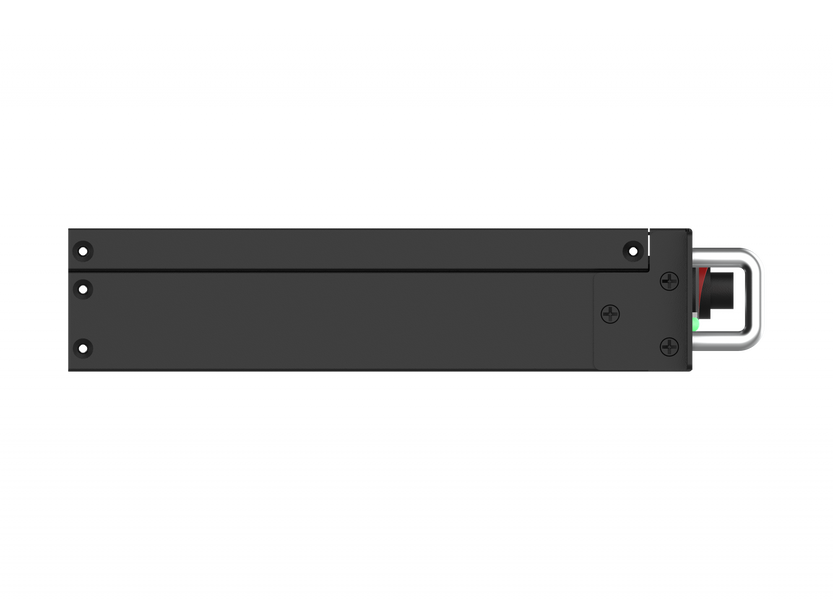
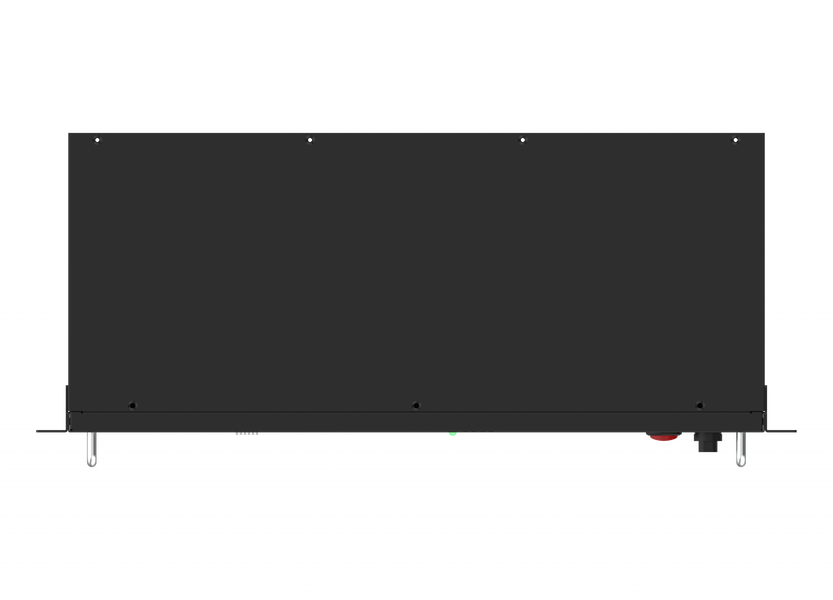
Measuring 442 × 150 × 44 mm, the LV-HUB shares the same 442 mm width as the Pylontech US-series battery modules, allowing it to fit naturally into the same 19-inch battery rack. Its slim 1U height means it takes up only one rack unit at the top of the stack. Weighing 3.0–3.5 kg, it is easy to rack-mount.
LED Status Indicators
The front panel features binary LED indicators (1–4) that display the number of battery strings currently online, as well as a STATUS LED that confirms normal operation or flashes red to indicate an error. This makes it easy to verify correct wiring during initial power-up.
Ultra-Low Power Consumption
The LV-HUB consumes just 2 W continuously from the 48V battery bus. It is equipped with a dedicated ON/OFF switch and a RESET button (press for 2 seconds to restart). The CAN OUT port includes a configurable DIP switch (position 6) to set a 120-ohm CAN bus terminal resistance — essential for long cable runs.
Technical Specifications
| Compatible Batteries | US2000, US2000C, US3000, US3000C, UP5000, US5000, US5000-B |
| Electrical | |
| Operating Voltage | 48 VDC (powered from battery bus) |
| Power Consumption | 2 W |
| Communication | |
| Protocols | CAN Bus / RS485 |
| CAN Baud Rate / Resistance | 500K / 0 Ω or 120 Ω (selectable via DIP switch) |
| RS485 Baud Rate | 9 600 / 115 200 |
| Ports | CAN OUT, CAN IN, RS232 (debugging), RJ45 ports 0–5 (battery groups), ON/OFF switch, RESET button |
| System Capacity | |
| Max. Strings (US5000/US3000C via CAN) | 6 strings × 16 modules = 96 modules per hub |
| Max. Strings (US2000B+ / US3000) | 5 strings × 8 modules = 40 modules per hub |
| Max. Hubs in Cascade | 5 (1 master + 4 slaves or hierarchical) |
| Max. Modules (Multi-hub) | 200 modules |
| Dimensions and Lifespan | |
| Dimensions (W × D × H) / Weight | 442 × 150 × 44 mm / 3.0 – 3.5 kg |
| Form Factor / IP Rating | 19-inch rack mount (1U) / IP20 (indoor only) |
| Operating Temperature / Lifespan | −20 °C to 60 °C / 15 years |
Service support in Ukraine
LLC “Total-Energo” — certified Pylontech partner in Ukraine. We provide:
- Selection of compatible batteries and inverters
- Victron + Pylontech integration
- Configuration of CAN communication, SOC, DVCC, charge control
- Technical support and service throughout Ukraine